


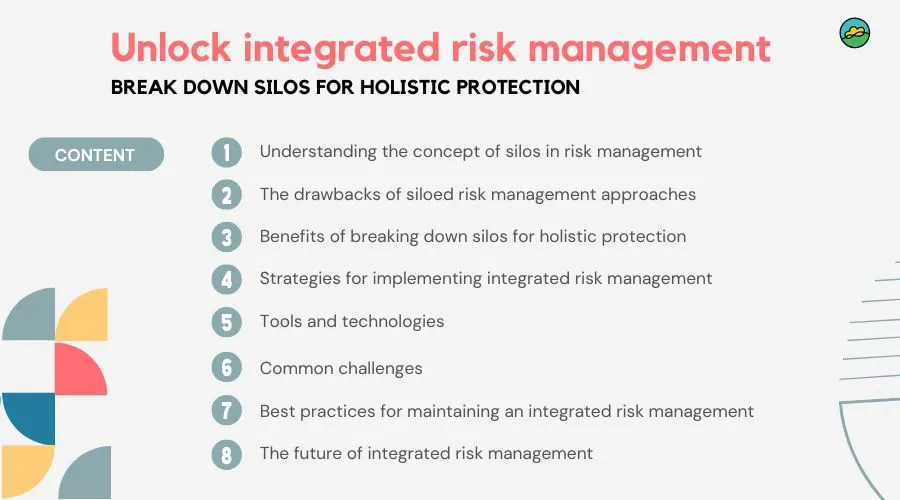
Most organisations manage risk in silos.
Cyber teams monitor cyber threats. Finance tracks financial risk. Operations manage supply chain disruptions.
But real-world risks do not occur in silos.
A cyber incident can trigger operational disruption, regulatory action, and financial loss simultaneously. Without integration, organisations fail to see the full picture.
A financial institution I worked with integrated 17 separate risk systems into a unified platform. The result was a 40% improvement in risk visibility and faster decision-making at the board level.
This is the essence of integrated risk architecture.
It requires:
- a unified risk taxonomy
- centralised data platforms
- scenario-based modelling across risk types
The goal is not more data — it is better insight.
Integrated systems allow organisations to understand how risks interact, amplify, and cascade.
Regulators are increasingly expecting this level of integration, particularly in areas such as operational resilience and systemic risk.
Boards must move from reviewing individual risk reports to understanding aggregate exposure.
The key question is: What happens when multiple risks occur together?
Organisations that adopt integrated risk architecture gain a strategic advantage. They can anticipate, respond, and adapt more effectively.
Those that remain siloed risk being surprised by interconnected failures.
In a complex and volatile environment, visibility is everything.
CTA: StraitsTribe designs integrated risk architectures that provide boards with a unified, real-time view of enterprise risk.

- ONLY 2 DAYS TO GO! Are you in? - September 30, 2026
- THE COUNTDOWN BEGINS – SESSION 1 OF OUR 12-PART WEBINAR SERIES! - September 30, 2026
- Raffles Education Institute Presents: Future-Ready Business Series 2026 - September 30, 2026