


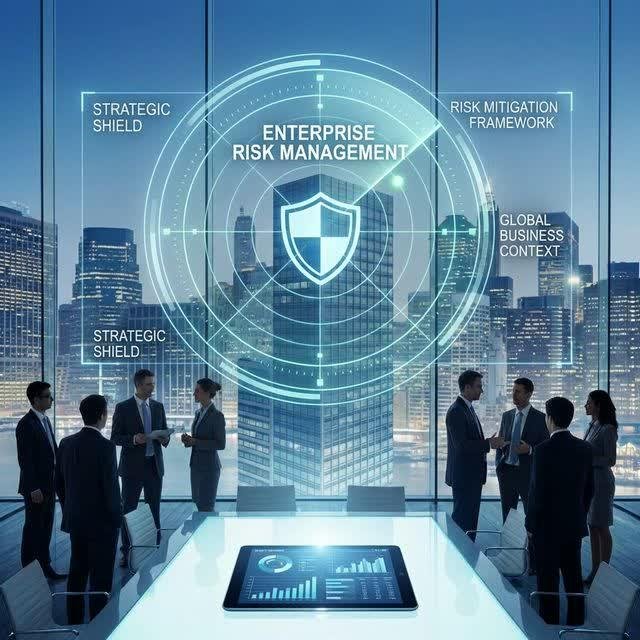
Why Enterprise Risk Management Matters Today
Businesses today operate in an environment where risks can emerge from technology, cybersecurity, regulations, financial uncertainty, supply-chain disruptions and changing market conditions. This makes Enterprise Risk Management an essential part of long-term business strategy.
A strong Enterprise Risk Management framework helps organisations identify potential risks, assess their impact, and take proactive measures before those risks affect business performance.
Enterprise Risk Management in Malaysia
For organisations operating in Malaysia, Enterprise risk management Malaysia has become increasingly important as businesses navigate regulatory changes, digital transformation, cybersecurity threats and evolving market expectations.
An effective risk management approach allows Malaysian organisations to understand their risk exposure and develop appropriate controls while supporting sustainable business growth.
Enterprise Risk Management in Singapore
Singapore’s position as a major financial and business hub makes effective risk management particularly important. Enterprise risk management Singapore focuses on helping organisations manage operational, financial, regulatory, technology and strategic risks in an increasingly complex business environment.
Organisations in Singapore need risk frameworks that are not only focused on compliance but also support better decision-making and business resilience.
The Role of Internal Audit Consulting in SEA
Across Southeast Asia, organisations are increasingly looking beyond traditional compliance-based auditing. Internal audit consulting SEA can help businesses evaluate their internal controls, identify weaknesses and strengthen governance and risk management processes.
Internal audit consulting can also provide independent insights that help management and boards understand whether their existing risk controls are working effectively.
Key Elements of Effective Enterprise Risk Management
An effective Enterprise Risk Management framework should include:
- Risk identification and assessment
- Internal controls and monitoring
- Regulatory and compliance management
- Cybersecurity and technology risk management
- Business continuity and resilience
- Internal audit and assurance
- Regular reporting to management and the board
Building a Strong Risk Culture
Enterprise Risk Management is not only the responsibility of a risk or audit department. It requires participation across the organisation.
Employees, management and board members should understand the organisation’s key risks and their role in managing them. A strong risk culture helps organisations identify problems earlier and respond to emerging risks more effectively.
Enterprise Risk Management for a Resilient Future
Whether an organisation operates in Malaysia, Singapore or across Southeast Asia, Enterprise Risk Management can play an important role in building resilience and supporting sustainable growth.
By combining effective governance, strong internal controls, proactive risk assessment and independent assurance, businesses can become better prepared for uncertainty while making more informed strategic decisions.
Conclusion
Enterprise Risk Management is becoming an essential business discipline across Southeast Asia. Organisations that invest in effective risk frameworks, strong internal controls and professional internal audit capabilities can better manage uncertainty and create a more resilient foundation for future growth.

- ONLY 2 DAYS TO GO! Are you in? - September 30, 2026
- THE COUNTDOWN BEGINS – SESSION 1 OF OUR 12-PART WEBINAR SERIES! - September 30, 2026
- Raffles Education Institute Presents: Future-Ready Business Series 2026 - September 30, 2026