

Anticipate What’s Next — Global GRC Trends Boards Can’t Ignore
Welcome back to Reinvent & Risk Resets, where we decode the shifts in governance, risk, and ESG shaping boardrooms worldwide — and what they mean for Southeast Asia’s leaders today. This issue zeroes in on three global GRC trends already reshaping the rules of the game. They’re not “future” concerns — they’re here, moving fast, and they demand board-level attention now. Trend 1: AI Governance Grows Up — From Pilots to Policy AI has gone from innovation experiment to enterprise infrastructure. Globally, regulators, investors, and customers now expect structured governance — not ad hoc controls. Key shifts: Action steps for SEA boards: Trend 2: Regulatory Complexity & ESG Fragmentation The compliance map is breaking apart. Data privacy, digital resilience, and climate disclosures are being legislated differently across regions. Key shifts: Action steps: Trend 3: Integrated, Real-Time Risk Governance Quarterly reports are out. Boards now expect live visibility, predictive insights, and interconnected dashboards. Key shifts: Action steps: SEA Spotlight Boardroom Cue Questions to ask this quarter: One Idea Worth Sharing “Governance in 2025 isn’t about static plans. It’s about adaptive frameworks — built to absorb shocks, flex with regulations, and respond when risks shift.” Final Reset AI oversight. ESG complexity. Real-time governance. These aren’t optional — they’re now the baseline of credibility. For Southeast Asia’s leaders, the opportunity is to leapfrog, not lag: Adopt global best practice early. Build a resilient risk culture. Lead with strength. Because in a volatile world, boards that anticipate what’s next don’t just survive — they shape the future. What’s your take? Which of these trends is already testing your boardroom? Reply or DM — I’d love to hear how you’re tackling it.
AI and Modern GRC: From Compliance Burden to Strategic Intelligence
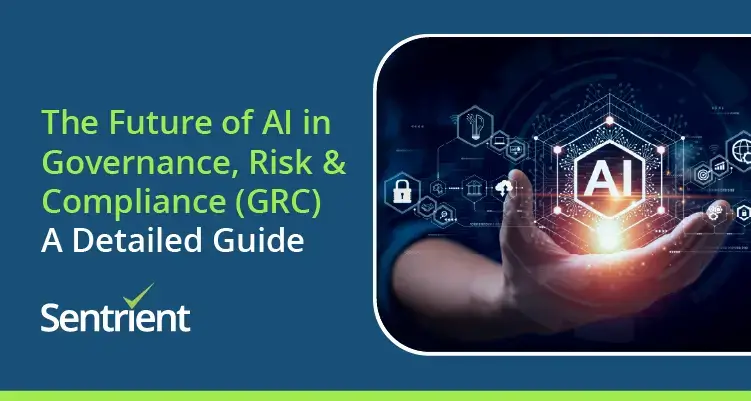
Artificial intelligence is no longer a future conversation. It is already embedded into how organizations operate, make decisions, and manage risk. From automated approvals to predictive analytics, AI is quietly shaping outcomes across functions. Yet, while adoption is accelerating, governance is still catching up. And that gap is where the real risk lies. For years, GRC has been viewed as a necessary layer — important, but often reactive. It documented risk, ensured compliance, and provided assurance after the fact. But AI is fundamentally changing that equation. It is forcing GRC to evolve from a control function into a system of intelligence that operates in real time. What makes AI different from previous technological shifts is not just its speed, but its autonomy. Decisions are no longer always human-led. Algorithms are recommending actions, approving transactions, flagging anomalies, and in some cases, executing decisions without direct oversight. This introduces a new category of risk — not just whether controls exist, but whether decisions themselves are explainable, accountable, and aligned to organizational intent. I often see organizations focusing heavily on deploying AI capabilities while underinvesting in the governance structures required to manage them. The conversation is dominated by efficiency and innovation, but far less by oversight and accountability. This imbalance creates exposure. Without clear governance, AI systems can introduce bias, operate as black boxes, and create regulatory and reputational risks that are difficult to trace once they materialize. At the same time, AI is also the most powerful enabler GRC has ever had. When applied correctly, it transforms how risk is monitored and managed. Continuous control testing replaces periodic reviews. Real-time anomaly detection replaces retrospective analysis. Predictive insights replace reactive responses. In effect, AI turns GRC into a living system — one that senses, learns, and adapts alongside the business. We are already seeing this play out across industries. In financial services, AI-driven transaction monitoring systems are identifying fraud patterns in seconds rather than days. In manufacturing, predictive maintenance models are flagging equipment risks before failures occur. In supply chains, AI is tracking disruptions and compliance risks across geographies in real time. These are not isolated use cases; they represent a broader shift toward embedded, intelligent governance. However, the organizations that are truly unlocking value from AI in GRC are not those that simply adopt the technology. They are the ones that integrate it thoughtfully into their governance frameworks. They ensure that AI outputs are explainable, decisions are auditable, and accountability is clearly defined. They recognize that AI governance is not just a technical issue, but a leadership responsibility. This is where the role of boards and senior leaders becomes critical. Governing AI requires a different level of engagement. It requires asking new questions: Do we understand how our AI systems make decisions? Do we have visibility into the risks they introduce? Are we balancing innovation with accountability? And perhaps most importantly, are we governing AI at the same pace at which we are adopting it? The future of GRC will be shaped by how well organizations answer these questions. AI will not replace governance, but it will redefine it. It will push GRC beyond compliance into the realm of strategic decision support. It will enable organizations to move from hindsight to foresight, from static controls to dynamic intelligence. But this shift will not happen automatically. It requires intent. It requires integration. And it requires leadership that understands that governance is no longer about slowing things down, but about enabling the organization to move forward with confidence. In a world where decisions are increasingly driven by machines, the real differentiator will not be who adopts AI the fastest, but who governs it the smartest.
Beyond Tech & Targets: Why Risk-Smart Culture defines AI & ESG Leadership?
Technology can transform processes. Sustainability can guide purpose. But without a risk-smart culture, both remain fragile. In 2025, as AI accelerates business transformation and sustainability climbs to the top of investor and regulatory agendas, risk culture has become the defining differentiator between companies that thrive—and those that stumble. Why Risk-Smart Culture Comes First? Risk culture isn’t about checklists or annual training. It’s how your people think, question, and act in the face of uncertainty. When culture is proactive, transparent, and ethically grounded, AI integration and sustainability efforts don’t just comply—they lead. AI as a Catalyst—But Also a Test AI is triggering a new wave of Business Process Reengineering (BPR). It exposes inefficiencies, speeds decisions, and drives predictive capabilities. But here’s the hard truth: AI doesn’t fix broken cultures—it magnifies them. Boards in Southeast Asia are beginning to see this. From Singapore’s AI Verify framework to Malaysia’s AI ethics roadmap, regulatory momentum is building—but regulation alone won’t embed resilience. Culture will. Sustainability as the Proving Ground Nowhere is risk-smart culture more visible than in sustainability: Only organisations with cultures that embrace accountability, transparency, and continuous learning can meet these dual demands: accelerating tech adoption and achieving ESG goals. What Boards Should Ask Now? “Does our culture encourage open conversations about AI, risk, and sustainability—or are we relying on retrofitted controls?” SEA Spotlight Final Thought “AI won’t fix a weak culture. Sustainability won’t survive without one. Risk-smart culture is the foundation of transformation—tech and ESG simply bring it to life.” Is your risk culture ready for an AI-driven, sustainability-focused future? Or is it still reactive? Comment, DM, or share your perspective—we’re building this future together. Enjoying this newsletter? Subscribe to Reinvent & Reset Risks for boardroom-ready insights that put culture at the core of transformation.
The Biggest GRC Risk Today Isn’t Technology — It’s the Governance Gap
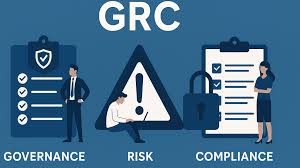
We spend a great deal of time talking about emerging risks — artificial intelligence, cyber threats, ESG exposure, geopolitical instability. Yet, in my experience, the most significant risk organizations face today is not any one of these factors in isolation, but the widening gap between how quickly risk is evolving and how slowly governance is adapting. Many organizations believe they are managing risk effectively. They have frameworks, policies, committees, and dashboards that provide a sense of structure and control. But beneath this surface, risk is still largely reported periodically, reviewed retrospectively, and managed in silos. In a world where risk evolves in real time, this creates a dangerous illusion of control. The acceleration of AI illustrates this gap clearly. AI is no longer a standalone capability; it is becoming embedded into every layer of business operations, fundamentally reshaping how decisions are made. Yet governance mechanisms have not evolved at the same pace. Boards often lack the depth of understanding required to oversee AI effectively, and many organizations have yet to establish robust ethical, risk, and accountability frameworks. As a result, companies are introducing entirely new categories of risk faster than they can manage them. The challenge is not just technological — it is structural and strategic. At the same time, other dimensions of risk are intensifying. One of the most overlooked areas is the rapid growth of machine identities — bots, AI agents, and automated systems that now outnumber human users in many environments. These identities create new vulnerabilities, from unauthorized access to complex identity-based cyber threats, and they challenge traditional approaches to governance and control. Organizations that fail to recognize and govern this shift risk losing visibility over critical parts of their own systems. Overlay this with rising ESG expectations and regulatory scrutiny, and the pressure becomes even more acute. Stakeholders are demanding not just compliance, but transparency, accountability, and real-time accuracy in reporting. Governance is no longer about meeting minimum requirements; it is about building trust. And trust, once lost, is far harder to rebuild than any control framework. What I have observed in organizations that are ahead of this curve is a willingness to rethink governance at a fundamental level. They are embedding GRC into business operations rather than treating it as a separate function. They are leveraging AI to enable continuous monitoring and predictive insights. They are integrating risk, compliance, and strategy into a unified view, and they are elevating governance capabilities at the board level. In doing so, they are not eliminating risk, but they are closing the gap between risk and response. The future of GRC will not be defined by more frameworks or more documentation. It will be defined by governance that is faster, smarter, and more integrated. Because the real risk is not uncertainty — it is believing you are in control when you are not. And in today’s environment, that is perhaps the most dangerous assumption an organization can make.
AI Is Here. Is Your Risk Framework Ready?
Welcome to Reinvent & Reset Risks, where we explore modern governance, risk, and ESG thinking — rooted in global best practices, tailored for Southeast Asia’s boardrooms and transformation leaders. This issue, we’re tackling a hot topic that’s already reshaping how we govern, operate, and make decisions: Artificial Intelligence. AI: The Fast-Moving Risk You Can’t Ignore AI is no longer just an emerging tech. It’s quietly (or loudly) powering decisions in customer service, credit scoring, hiring, procurement — even ESG data analysis. But while adoption is growing, governance often isn’t. So I’ll ask you the same thing I ask board clients across Southeast Asia: Is your risk framework built to handle AI — or is it just retrofitting after each new project? Top 5 AI Risks GRC Professionals Should Be Watching What Can Risk & Compliance Leaders Do Today? Here’s a practical starting point: Because governance shouldn’t play catch-up with technology. SEA Spotlight: What’s Happening Across the Region? Singapore: AI Verify is gaining traction — expect more public-private alignment. Malaysia: AI ethics are being explored within national digital strategies. Indonesia & Vietnam: AI adoption is outpacing controls, especially in FinTech. Regional takeaway: The gap between innovation and regulation is widening — and that’s where GRC leaders need to step up. Boardroom Cue: A Question to Ask This Month “Do we know where AI is making decisions in our organisation — and can we audit those decisions if needed?” Start with this at your next audit committee or risk leadership meeting. One Idea Worth Sharing “AI will not replace auditors or compliance officers. But those who use AI — responsibly and strategically — will replace those who don’t.” Share this with your team — it’s the mindset shift GRC needs. Final Thought AI is here, fast and powerful. Governance needs to be just as fast — but also thoughtful, ethical, and human. As Southeast Asia continues to accelerate into digital transformation, let’s make sure risk frameworks aren’t just catching up… but leading from the front. What’s your take? Are your AI risks mapped and managed — or still emerging? Comment or message me, let’s trade notes. Enjoying this newsletter? Subscribe to Reinvent & Reset Risks. For fresh insights on risk, ESG, and board-level transformation — every 2 weeks, from Southeast Asia to the boardroom.